Floyd Steadman was the Saracens scrum half for 10 years, during which several years he served as the captain. A role not often given to black players even in today’s game?
As part of our Black History Month, I caught up with Floyd to discuss his illustrious career despite some humble beginnings and we started talking with Floyd sharing with me his new book entitled “A week one Summer”

A Week One Summer by Floyd Steadman
Everybody faces some degree of adversity at some stage in their lives, but few have faced as many challenges as Floyd Steadman.
Rejected by his father, he coped with a childhood in care. Told he should train to ‘work with his hands’, he insisted on taking A levels so he could become a teacher. As one of the few black players in English club rugby, he was named Saracens captain at the age of 23 and played a leading role in the club’s progress during the 1980s.
After retiring from rugby, he emerged as an inspiring teacher and headmaster, having a positive impact on many, many young lives.
Over and over again, Floyd Steadman has prevailed against immense odds, prevailing not with anger, argument or hysterics, but with persistence, dignity and integrity.
This is his story.
HOW DID YOU START IN RUGBY?
FS – I went to Kingsbury High School in West London and despite being a state school they had a strong rugby fixture list with grammar school traditions so we were all encouraged to play rugby from the outset. My Welsh PE teacher (Brian Jones) lined us up and simply pointed to us in the class and said “you will play rugby, you will play rugby” and our fate was sealed. Little was I to know that this initial introduction to rugby and my rugby teacher would have implications later in my life.
HOW DID YOUR RUGBY PROGRESS?
FS – I played a great deal of rugby as part a very successful Kingsbury High School team including playing in Middlesex county cup matches. The team was one of the most successful in the school’s history, winning two Middlesex Cups. In one year, we were unbeaten, winning the county 15 a side and 7s trophies. During that time, I was selected for Middlesex county trials. I was not that successful to begin with only managing to get selected for Middlesex once at U15/U16 and then twice for the U18 (when I was lower 6th U17). However, by the next season at U18 and I was in the upper 6th and I not only made the team but was also made captain. From there the pathway was for Regional teams. In my case this was via London Counties trials where I was selected as replacement for Nick Youngs (Eastern Counties Capt). I was also invited to play for, and captain, Wasps schoolboy teams (they were based in North West London at the time)

WHAT WAS LIFE LIKE FOR YOU OFF THE PITCH IN THE EARLY YEARS?
FS – I was actually brought up in a children’s home so life was not too easy with the “normal” parental support that children have. In my first home I was one of 60 children. By the time I moved to my second children’s home I was very lucky (in some respects) as from the age of 10 I was given my own room which removed me from some of the issues and challenges of being brought up in such an environment. I also felt incredibly lucky as children’s homes at the time would only support and allow you to live in them until you were 16. I was given the opportunity to extend this for a further year but even then, it was still going to be difficult as I was in the middle of my A levels. My then school PE teacher (Mr Brian Jones) went above and beyond and offered for me to stay with him and his family (his son also played rugby with me) for my Upper 6th year. This created a platform of support that enabled me to achieve the exam results I needed and move on to University and continue with my rugby.

HOW DID THE SARACENS OPPORTUNITY HAPPEN FOR YOU?
FS – Following on from completing my A levels I obtained a place at Borough Road College (now Brunel University) to study a Teaching Diploma in Education and majored in Physical Education. The head coach (John Hunter) was also the coach at Saracens. In my first season I was understudy to Chris Milford. He was a young Doctor who would work every other weekend. This game me the opportunity to play regularly for the 1st team. At the start of the 1981 season I became the starting scrum half and remained as the starting scrum half until retiring in April 1990.
“It was incredibly brave of them [the Saracens board] because there was no other black captain,” Steadman says. “I got a lot of interest in the national press [earlier] and thought it was because I was 23 or 24, but I found out that the interest was because of the colour of my skin, playing scrum-half, and being captain.”
Floyd Steadman
Guardian June 2021
HOW DID YOU BECOME CAPTAIN?
FS – Andrew Harrower was the captain in the 1981-82 season but moved to the Metropolitan Police half way through the season. I had been the number 1 scrum half from the start of the season, so it became a natural progression for me to take over, a brave decision made by the committee at that time. I held the role for a few seasons but due to personal circumstances I relinquished it (but still played) and then took it back over from September 1988 until retiring in 1990. In my final game Saracens played Wasps, with the winner becoming Division 1 (now the Premiership) champions.

WHO WERE YOUR PEERS AT THE TIME?
FS – My peers or nemesis from a playing perspective were Nigel Melville (Wasps), Dewi Morris (Liverpool St Helens & Lancashire), Steve Bates (Wasps), Richard Hill (Bath), Dai Bishop (Pontypool). We always had great games and Dai Bishop was always a difficult opponent.
DID YOU PLAY ANY REPRESENTATIVE RUGBY?
As well as playing for Saracens, I also represent Barbarians, London Division, Middlesex (Capt), Public School Wanderers and of course Reading West Indians.
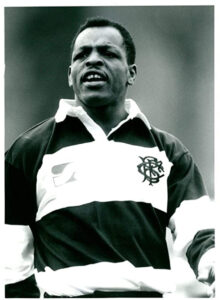
DID YOU EVER HAVE ANY NEGATIVITY TOWARDS YOU?
FS – Sadly there was a great deal of hostility from some quarters, including the press. There was a great deal of national interest when I first became captain of Saracens. I assumed that it was because I was relatively young at 23. A contact I had at a national newspaper told me it was because I was a black man playing scrum half and captaining the team. Some were questioning whether a black player had the intelligence to motivate the team, call the plays and make crucial decisions. I particularly remember a West Country game (club will remain anonymous) where there were many monkey chants when I took the pitch and on one occasion there were comments of “there’s three of them”. Referring to the fact that myself and the two wingers had taken the field for Saracens. It is quite ironic how times have changed as I am now renovating a home in Cornwall where I also spend a good part of my time. The local community around me have been very welcoming and supportive.
HOW DID YOU GET INVOLVED WITH READING WEST INDIANS RUFC?
FS – I met Tim Bell after playing for Saracens against Harlequins and he simply invited me along. When Timmy said come and play, there was no getting out of it! I was intrigued and excited as it was an chance to get associated with my culture and heritage. I came back regularly to play as often as I could, and it was a great experience. Great company, relaxing atmosphere, entertaining rugby and good rum!.
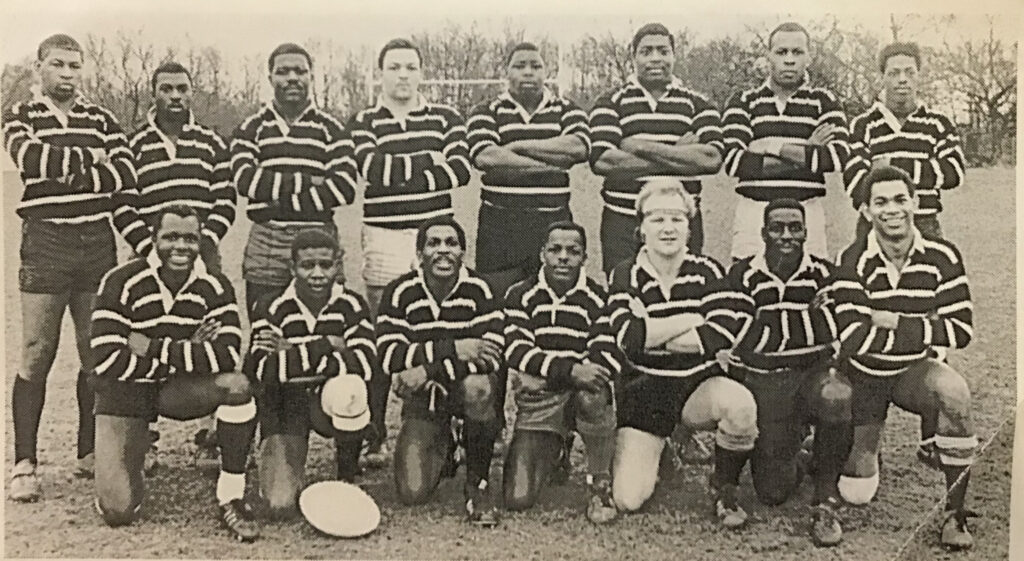
Front Row L to R: Dave Harper, Joe Bell, Tim Bell, Floyd Steadman, ????, Mickey Bell, Tony ??? (Sale)
WHAT ABOUT LIFE AFTER RUGBY?
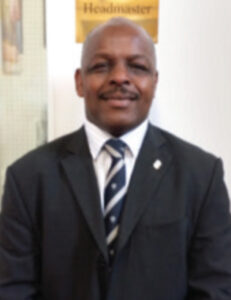
FS – I had trained as a teacher and my first teaching job was at Edgware School after I met a South African man at the Middlesex 7s in Twickenham stadium, and he told me to apply for a job coming up at his school. After three enjoyable years I moved to Bishop Douglass School in East Finchley. From there I spent a year out of education, working for a sports marketing company. A phone call from the High Master of St. Paul’s School gave me the opportunity to work in private education. I spent 11 years there as Head of Sport in the prep school. Later I was promoted to become Head of the junior section of the school. In 2001 I moved to Mill Hill Prep as Deputy Head-Pastoral. I always felt that I needed to further advance my education in order to be considered for more senior roles, so I studied for a Masters in Educational Leadership at the University of Buckingham. This became my calling and I progressed and during my career became Head of four different independent schools.
WHAT ABOUT NOW YOU ARE IN RETIREMENT?
FS – I am now semi-retired apart from working as a consultant for Anthony Millard Consulting in the independent educational sector (have worked in it for over 30 years) and am also active in several charities including Cancer Research https://www.cancerresearch.org/ , Drive Forward Foundation https://driveforwardfoundation.org/ both of which are very dear to my heart. I am also in the process of writing my autobiography. With the Black Lives Matter movement once again highlighting racial inequalities, I spend some time visiting schools to talk about unconscious bias. With the remainder of my time I watch two of my sons play rugby. One of which has just finished a stint at the London Irish Wildgeese. I am still hopeful that at least one of them will play for Jamaica.
WHAT WOULD PEOPLE NOT KNOW ABOUT YOU?
FS – When I was headmaster of Salcombe Prep School I had a pupil who would always go and play basketball at every school break opportunity. I said to his parents one day that they really needed to take him to a rugby club as he could be a good player. They duly did and years later after a England game in 2017 I received a call from the said parent to thank me for the recommendation.
WHO WAS THE PLAYER?
FS – Maro Itoje
Floyd Steadman (former Saracens captain 1980’s with current Saracens and England lock Maro Itoje one of his old pupils at Salcombe Prep. (London) – GUARDIAN JUNE 2021
RECENT INTERVIEW (Stories from Floyd Steadman – June 2021)

(Sound Only)
“You crossed the River Severn and you knew you were in for a battle”
Floyd Steadman
Look out for more great Black History Month celebrations….